

Autistic burnout is a full-body shutdown that can happen when chronic demands, sensory overload, and long-term masking push the nervous system beyond capacity. It is not laziness. It is not a motivation problem. It is not simply being tired. It is a nervous system response to long-term survival mode.
Many people describe burnout as fog, shutdown, emptiness, paralysis, or feeling like a “ghost of themselves.”
Please note: This page focuses on autistic burnout, but similar experiences are sometimes described as neurodivergent burnout and can happen across other neurodivergent identities (such as ADHD or dyspraxia/DCD).
What Is Autistic Burnout?
Autistic burnout is an involuntary, whole-body response to a chronic mismatch between a person and their environment. Unlike general burnout, this type of burnout often affects daily functioning at a deep level, including sensory experiences, interoception, communication access, cognition, and daily living tasks.
There is no wrong way to experience autistic burnout. It is very different for each person.
Signs of Autistic Burnout in Adults
Recognizing autistic burnout symptoms can be difficult, especially when a person has been needing to mask and suppress their inner experience for years. Many autistic people have learned to push through needs until the body gives in and stops cooperating.
Common signs of autistic burnout (in adults and children) or symptoms of autistic burnout include:
- Struggling to complete everyday tasks (ADLs/IADLs)
- Reduced energy, stamina, and capacity
- Difficulty with memory or focus
- Heightened sensory experiences (sensations feel louder, harsher, or more unpredictable)
- Shutdowns, withdrawal, and increased need for solitude (despite many times wanting to participate or be around people)
- Emotional numbness or feeling disconnected from the body
- Loss of skills that were previously accessible (skill regression)
- Reduced communication access (including reduced speech)
- Disconnection from body signals (hunger, thirst, sleep, anxiety)
- Increased illness / chronic fatigue
- Motor coordination changes
These autistic burnout symptoms are not a checklist you must match. What matters is noticing changes in access to daily life, regulation, and energy.

When Autistic Burnout Looks like “Behavior” or “Regression”
Autistic burnout in adults or children can look like:
One of the most harmful misunderstandings about autistic burnout symptoms is how often they are misread as behavior.
- School refusal or increasing school/work absences
- Grades or work participation falling
- Decrease in communication skills
- Increased shutdowns, meltdowns, or withdrawal
- Losing skills or independence
- “Not trying” or “not caring”
Key reframe: This type of burnout is not a motivation problem. It is a capacity problem. When demands exceed capacity, the nervous system protects itself.
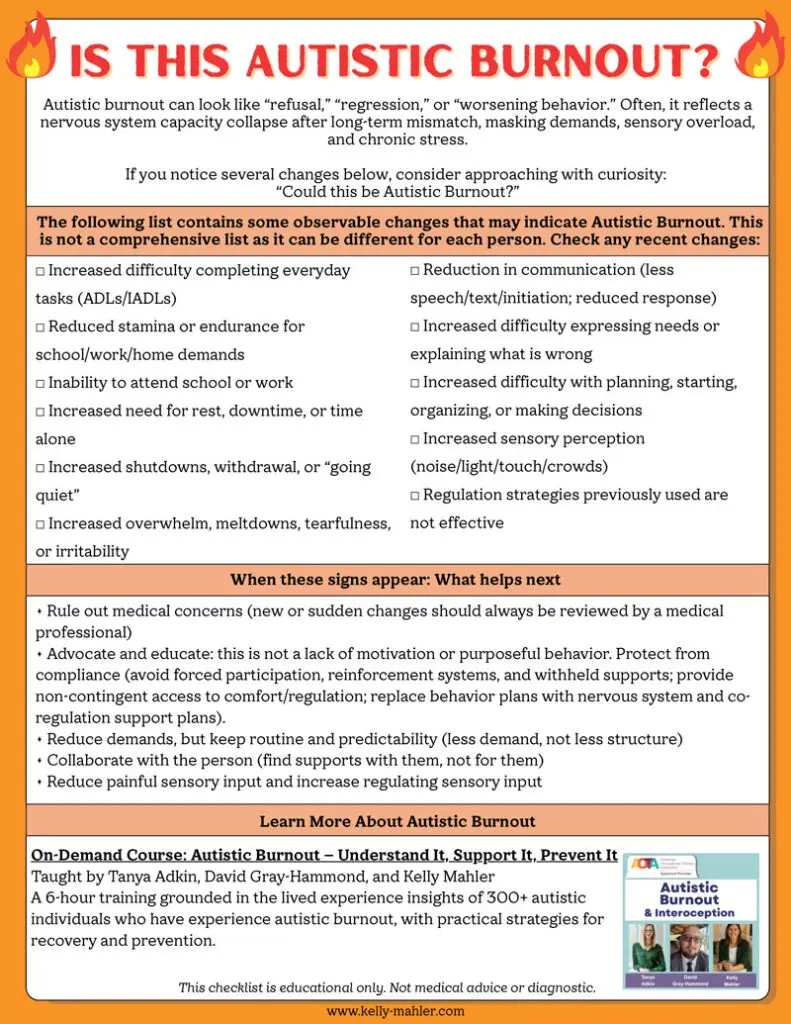
Free Autistic Burnout Checklist (Recommended Next Step)
If you’re wondering whether what you’re seeing could be autistic burnout, download my free autistic burnout checklist. It helps you notice capacity clues that are often misread as “behavior” and respond with support, not pressure.
What Causes Autistic Burnout?

Autistic burnout is often the predictable result of a long-term mismatch between the person and their environment. Over time, that mismatch can place ongoing strain on the nervous system until it can no longer sustain daily demands.
Common contributors include:
- Chronic sensory overload
- Constant social demands and masking expectations
- Executive function overload and cognitive fatigue
- Unpredictable schedules and transitions
- Unaccommodating school/work systems
- Chronic invalidation (“try harder,” “you’re fine,” “stop overreacting”)
- Late diagnosis and/or lack of support
- Trauma and/or identity suppression
This is why autistic burnout vs regular burnout matters. In autistic burnout, the mismatch is often pervasive and long-term. It is not just job stress or temporary overload.

How Compliance Culture Contributes to Autistic Burnout
Many autistic and neurodivergent people are taught, directly or indirectly, to override distress signals in order to meet expectations.
Compliance-based environments often reward:
- Ignoring discomfort
- Suppressing stimming
- Tolerating sensory pain
- Performing regulation or social behaviors
- Prioritizing adult expectations over body needs
Over time, this can increase masking demands, reduce access to early internal warning signs, and delay recognition until collapse.
The Role of Interoception in Autistic Burnout
Interoception is the internal sense of what is happening inside the body. This includes cues like hunger, thirst, fatigue, pain, temperature, energy, and emotional shifts.
For many autistic people, interoception can already work differently at baseline. On top of that, many autistic people have spent years in survival mode, masking, and pushing through distress to meet expectations. Over time, this can create a disconnect from inner body signals.
This matters because when interoceptive signals are harder to access, it becomes harder to:
- Notice early warning signs that burnout is building.
- Recognize when the nervous system is reaching capacity.
- Identify your own personal autistic burnout symptoms.
- Know what supports the body uniquely needs for autistic burnout recovery.
During autistic burnout, many people report interoceptive changes such as:
- Missing hunger or thirst cues.
- Exhaustion that shows up suddenly and severely (with few subtle cues).
- Pain signals arriving late or intensely.
- Emotions feel fuzzy, inaccessible, or numb.
- Uncertainty about what support would actually help their body.
- Physical illness may go unnoticed until extreme.
Interoception is not about forcing yourself to push through. It is about gaining clues about how the body feels and what it needs for comfort, health, and regulation, so the nervous system does not have to scream in order to be heard.

Recovery Strategies for Autistic Burnout
Autistic burnout recovery is not about trying harder. Recovery starts with one core truth: burnout is a nervous system response, not a personal failure.
Helpful strategies for recovering from autistic burnout may include:
- Reducing demands immediately and meaningfully
- Increasing accommodations and supports (as needs, not rewards)
- Prioritizing sensory safety and reducing sensory load
- Increasing predictability and reducing cognitive overload
- Building interoception awareness gently and without pressure
- Rebuilding routines slowly with flexibility and choice
- Getting support from validating people and affirming professionals
- Increase communication supports (AAC, visuals, texting, gestures, scripts)
If you are wondering how to deal with autistic burnout, one of the most important shifts is moving away from “fixing behavior” and toward reducing mismatch and increasing support.
A note on unmasking: some people recover by reducing the demand to mask. Unmasking is not equally safe for everyone. Ableism, racism, gender-based oppression, trauma history, and lived experience shape what safety can look like.

Want a Deeper Guide with Real Strategies? Take the Course.
If this page is helping you reframe what you are seeing, and you want more than general advice, this is your next step.
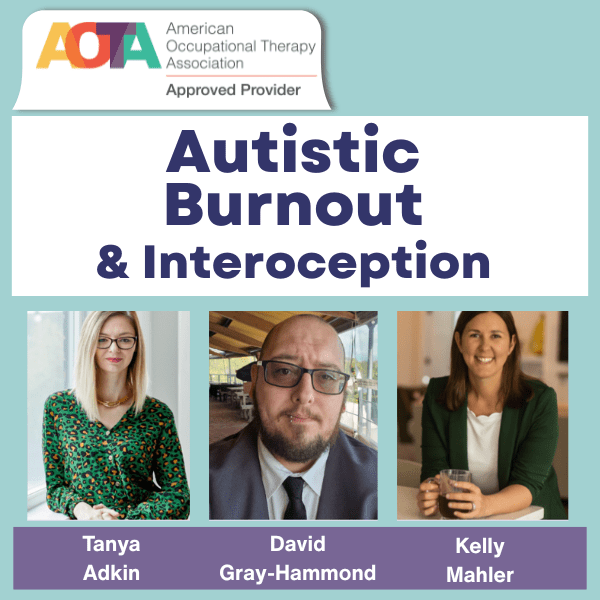
On-Demand Course: Autistic Burnout – Understand it, Support It, Prevent It
This 6-hour course is taught by:
- Tanya Adkin
- David Gray-Hammond
- Me (Kelly Mahler)
It blends:
- Lived experience
- Summarized findings from a survey of 300+ autistic individuals who have experienced autistic burnout
- Common symptoms of autistic burnout (according to autistic people)
- Practical recovery strategies
- Prevention-first support
- Interoception and nervous system understanding
In the course, we teach prevention and recovery frameworks, including autistic-lead concepts like energy management, sensory safety (inner and outer stabilization), and monotropism.

FAQs About Autistic Burnout
If you still have some questions as you begin to understand more about autistic burnout, you’re not alone! Here are some of the most frequently asked questions I hear about the topic.
How Do I Know if This Is Depression vs. Autistic Burnout?
There can be an overlap. Depression vs autistic burnout is a common question because both may involve withdrawal, reduced functioning, and exhaustion. However, symptoms of autistic burnout often include sensory and interoceptive changes, skill regression, and a nervous system “capacity collapse” after long-term mismatch and masking. Depression more often includes persistent low mood, hopelessness, worthlessness, or loss of pleasure. Many people experience both. If there are safety concerns, reach out for professional support.
Can Autistic Burnout Cause Skill Regression?
Yes. Many people in autistic burnout describe losing access to skills they previously had, especially communication, executive functioning, daily living tasks, and social capacity. This is not manipulation or refusal. It is the nervous system protecting itself when demands exceed capacity.
How Long Does Autistic Burnout Last?
There is no one timeline. Autistic burnout recovery can take weeks, months, or longer. For some people, burnout is a shorter period of collapse and restoration. For others, it can be prolonged, especially when the environment does not change, or supports are not available. Recovery is not linear, and not everyone returns to their previous baseline. The most important factor is reducing mismatch and increasing meaningful support.
Can Other Neurodivergent People Experience Autistic Burnout?
Many neurodivergent people report extremely similar burnout experiences, especially those with ADHD or dyspraxia/DCD. For those searching for ADHD burnout vs autistic burnout, the lived experience can overlap even when the underlying neurotype is different. Regardless of labels, the most helpful question is often: what is my nervous system communicating, and what supports reducing survival mode?