


What if the goal were not to get kids to comply, but to help them understand what their body needs to successfully participate?
One thing is becoming clear: compliance culture needs to go. Power struggles are not working. Rewards and punishments, behavior charts, and more pressure are not creating lasting change or stronger self-regulation skills. Yet when children struggle, the response is often to increase pressure: more behavior charts, more rewards, more forcing.
But what if the problem is not lack of motivation, but lack of support? What if many children are not refusing, avoiding, masking, or shutting down because they “don’t want to,” but because they have not yet been supported in understanding what their body needs to navigate challenges successfully?
The Less Compliance Movement Offers a Different Path
Less compliance is an interoception-informed approach that focuses less on controlling behavior and more on helping children understand what their body needs to participate successfully. Rather than using pressure, rewards, or punishment to force obedience, less compliance approaches aim to build body awareness, body trust, self-understanding, and long-term participation skills.
Instead of asking: “How do we make them do it?”
Less compliance asks: “What might this child’s body need right now to make doing it more possible?”
Less compliance does not mean “no rules,” permissiveness, or removing expectations. It means recognizing that meaningful participation becomes more possible when children feel safe, supported, understood, and connected to their internal experience and nervous system safety.
It shifts from forcing children to do hard things to helping children do hard things.
What Is a Less Compliance Approach?
The end goals are often the same in both compliance-based approaches and interoception-informed approaches: helping children participate, learn, complete tasks, stay safe, and navigate daily life successfully. What changes is how we help children get there.
In many compliance-based approaches, the primary focus becomes outward performance: sitting still, following directions, completing tasks on demand, and earning rewards for cooperation. In a less compliance approach, the focus shifts toward understanding what may be making participation difficult in the first place so children can be better supported in navigating challenges successfully.
For example, a child may be struggling to complete math work at school. In a compliance-based approach, the primary goal may be to get the child to stay seated and finish the assignment regardless of what is happening internally. In a less compliance approach, we first become curious about what the child’s body may need in order for participation to feel more possible. Does the child need movement first? Does the noise in the environment need to be reduced? Is hunger, thirst, pain, or sensory overwhelm interfering with learning? Once those needs are better understood, support can be adjusted to help participation, self-regulation, and learning feel more accessible and sustainable.
The expectation itself may remain. What changes is how we support the child in reaching it.
Less compliance does not mean removing expectations. It means recognizing that meaningful participation becomes more possible when children feel safe, supported, understood, and connected to their internal experience.

Voices from the Less Compliance Community
Over 300 people shared their perspectives in the Less Compliance Community Survey. Here is how they describe less compliance:
“Less compliance means empowering and valuing kids and teaching them that their experience and needs matter.”
“Less compliance means the person is involved in the solution.”
“Dropping what can be dropped. Not having rules for no real reason. Keeping the ones that are absolutely necessary.”
“Less compliance means more active participation and more internal motivation to complete tasks. When the child understands the task, is regulated, and has the skills, task completion will occur.”
“Less compliance shifts the focus away from assuming there should be an automatic connection between an adult giving a command and the child executing. We should not expect or want a child to comply simply because a directive was given. We should strive for creating situations where the child meets an expectation because they trust the adult, they understand what is being asked of them, and they have both the resources and skills to be successful.”
Download The Free Booklet
Our free 90-page Less Compliance Community Booklet features these voices and many more! The booklet also includes practical examples from educators, therapists, caregivers, and neurodivergent adults navigating everyday challenges through a less compliance approach, and how to respond to the pushback many people experience when shifting away from compliance culture and compliance-based therapy approaches.
How Less Compliance Naturally Supports More Interoception
Many adults describe growing up feeling like they had to ignore their body to succeed. Push through exhaustion. Sit still through discomfort. Hide stress. Mask overwhelm. Perform “appropriate” behavior no matter what was happening internally.
Over time, this can make it harder to notice body signals, understand what those signals mean, know how to regulate, or trust internal experiences. This can have lifelong impacts. For example, because of compliance-based approaches such as Applied Behavioral Analysis (ABA), many neurodivergent adults describe experiences of chronic stress, masking, autistic burnout, and difficulty recognizing what their body needs before becoming completely overwhelmed. As a result, many families, educators, and neurodivergent adults are now searching for alternatives to ABA or other compliance-based approaches that prioritize outward performance over internal experience.
A less compliance approach supports children in becoming more connected to their internal signals rather than teaching them to override them to perform or comply. Instead of asking children to disconnect from themselves to succeed, less compliance approaches aim to help children better understand what their bodies need to participate successfully and build stronger self-regulation skills.

The Interoception Curriculum©: A Step-by-Step Path Toward Less Compliance
Understanding the less compliance approach is one thing. Actually, helping children become more aware of their body signals and explore what their body uniquely needs is another.
This is where structured supports can help.
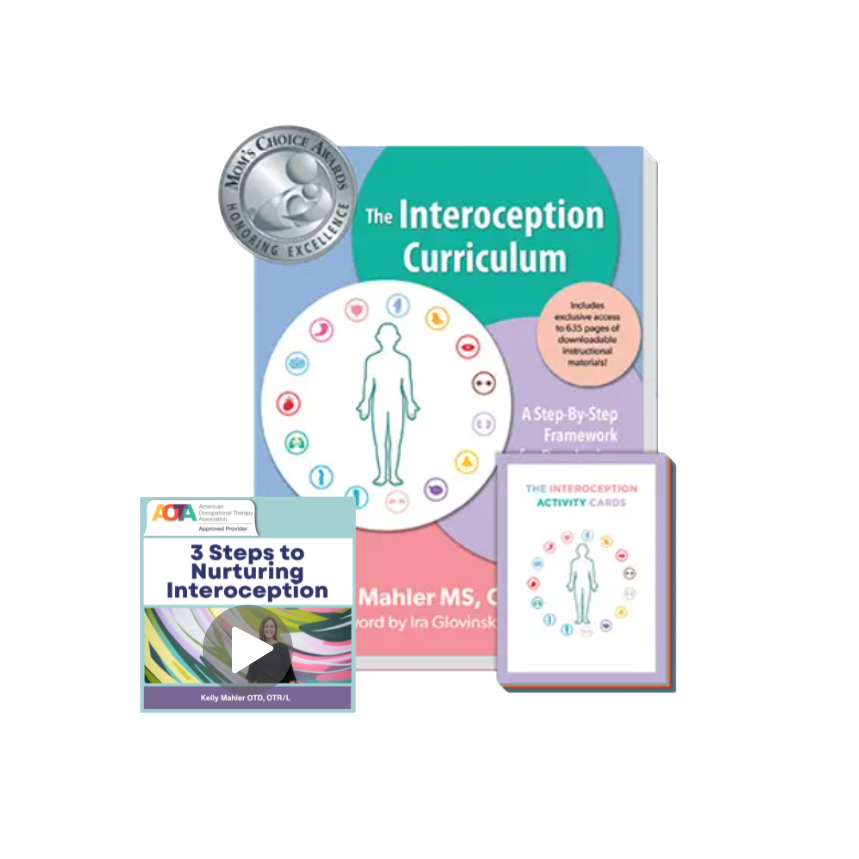
The Interoception Curriculum© Starter Bundle offers a practical, step-by-step path for helping adults begin exploring body signals, regulation, participation, and self-understanding through curiosity rather than pressure, punishment, or performance.
Designed for educators, therapists, caregivers, and self-helpers, the bundle combines foundational interoception education with practical tools and supports that can be used across home, school, therapy, and everyday life. It includes:
- On-Demand Course: 3 Steps to Nurturing Interoception: A 3.5-hour on-demand course where Kelly introduces the science of interoception and the Body-Emotion-Action framework. Includes 0.35 AOTA CEUs, downloadable handouts, and bonus videos.
- The Interoception Curriculum©: A structured, adaptable curriculum with 25 lesson plans organized around Body, Emotion, and Action, plus 635 pages of customizable materials, worksheets, neuro-affirming regulation strategies, and visual supports.
- Interoception Activity Cards (Digital): 170 full-color printable activity cards that take less than 60 seconds each, designed for home, classroom, and therapy settings.
Wear Less Compliance Proudly
Ready to show where you stand? Our Comfort Colors tees let you carry the message wherever you go.



Frequently Asked Questions About Less Compliance
Has less compliance piqued your curiosity? Do you still have some questions about what this approach means? Or are you looking for more information on neuro-affirming regulation strategies? Find the answers to your frequently asked questions about less compliance and interoception here.
What Does ‘Less Compliance’ Mean?
What Does ‘Less Compliance’ Mean?
Less compliance is an interoception-informed approach that focuses less on controlling outward behavior and more on helping children understand what their body needs to participate successfully. Instead of relying primarily on pressure, rewards, punishment, or forced obedience, less compliance approaches aim to build body awareness, self-understanding, regulation, and long-term participation skills.
Is Less Compliance the Same as Permissive Parenting or Teaching?
Is Less Compliance the Same as Permissive Parenting or Teaching?
No. Less compliance does not remove structure, boundaries, or expectations. The difference is that the focus shifts from demanding blind obedience to supporting the regulation, body awareness, accessibility, and support needs that help participation feel possible.
What Is the Difference Between Less Compliance and ABA?
What Is the Difference Between Less Compliance and ABA?
Many compliance-based approaches, including ABA and other behavior-focused models, primarily focus on changing observable behavior through reinforcement and consequence systems. Less compliance approaches begin by exploring why participation may be difficult in the first place by considering body signals, regulation needs, sensory experiences, nervous system safety, and interoception.
Both approaches may share goals such as learning, participation, communication, and daily life success. The difference is how those goals are supported.
Why Are Many Families Searching for Alternatives to ABA?
Why Are Many Families Searching for Alternatives to ABA?
Many families, educators, and neurodivergent adults are searching for alternatives to ABA and other compliance-heavy approaches because of concerns related to masking, autistic burnout, nervous system stress, and the long-term impact of teaching children to override body signals in order to perform or comply.
How Does Less Compliance Support Self-Regulation?
How Does Less Compliance Support Self-Regulation?
Less compliance supports self-regulation by helping children become more aware of body signals, understand what those signals may mean, and identify supports that help participation feel more possible. Interoception-informed approaches focus on building regulation through body awareness, collaboration, and support rather than pressure or performance alone.
What Is Compliance Culture?
What Is Compliance Culture?
Compliance culture refers to systems and approaches that prioritize outward obedience, performance, and behavioral control over internal experience, regulation, accessibility, autonomy, and body trust. Compliance culture can appear in schools, therapy settings, workplaces, parenting approaches, and medical environments.
How Do I Start Using a Less Compliance Approach?
How Do I Start Using a Less Compliance Approach?
Start with curiosity. Instead of asking “How do I make this child do it?” begin asking “What might this child’s body need right now to make participation feel more possible?”
The Interoception Curriculum© Starter Bundle offers a practical step-by-step framework for helping children build body awareness, self-understanding, regulation, and participation skills through interoception-informed support.
What Is the Connection Between Less Compliance and Interoception?
What Is the Connection Between Less Compliance and Interoception?
Interoception is the sense that helps people notice and understand body signals such as hunger, pain, stress, exhaustion, or sensory overwhelm. Less compliance approaches support children in becoming more connected to these internal signals rather than teaching them to override them in order to perform or comply.
What Is International Less Compliance Month?
What Is International Less Compliance Month?
Every July, the interoception community and I recognize International Less Compliance Month, a time to celebrate the shift from compliance culture toward approaches grounded in body trust, inner curiosity, and collaborative support. Join the community at kelly-mahler.com to stay informed about events, free resources, and the growing movement.