

Originally published April 13, 2026
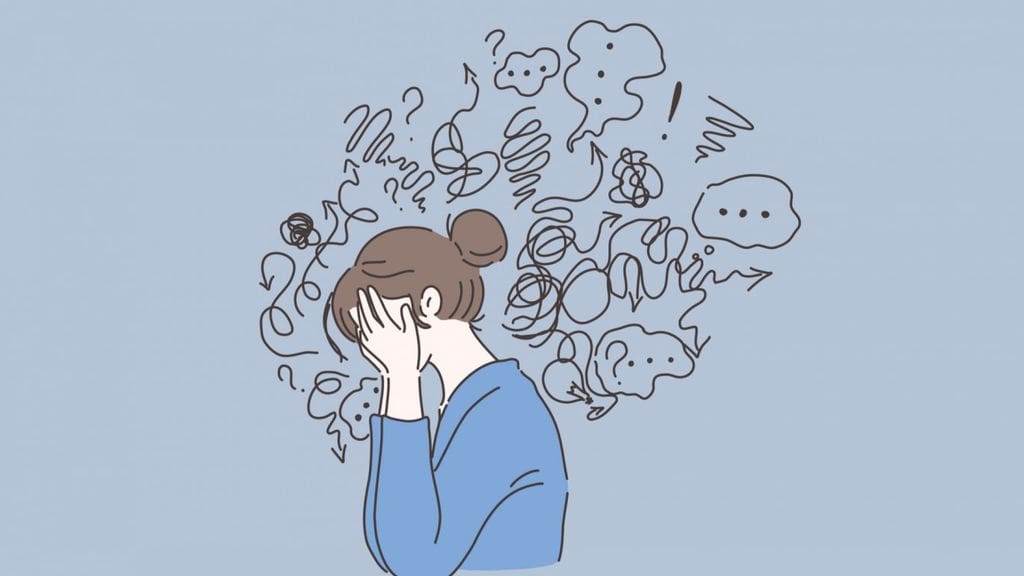
Intense interoception refers to experiences where body signals feel strong, noticeable, and hard to ignore. Sometimes described as hyperawareness or hypervigilance of body sensations, these signals may show up as one or two intense sensations or many signals all at once, and can be overwhelming, distracting, or difficult to interpret, especially when trust in the body has been disrupted.

Much of the conversation about interoception focuses on muted or hard-to-detect body signals. But what about the opposite experience?What about when body signals feel strong, immediate, and impossible to ignore? For many people, body signals are not subtle. Very small changes in body sensations can be immediately noticeable. Persistent. Sometimes overwhelming. And even when the signal makes sense, the experience can still be distracting, intense, or hard to shift.
What Is Intense Interoception? (Strong Body Signals Explained)
Intense interoception describes experiences where body signals feel strong and highly noticeable.
This can show up in different ways:
- one or two signals that feel especially intense
- or many signals happening at once; an overall sense of internal chaos or overload
Examples might include:
- feeling full after just a few bites
- frequent strong bladder or “need to pee” sensations that feel urgent or hard to ignore
- being very aware of panic sensations such breathing, heartbeat, or swallowing
- noticing small changes in sensations (e.g., pressure, tingling, body temperature) right away
- feeling multiple sensations at once (e.g., tight chest, warm face, stomach discomfort, racing heart)
- discomfort that quickly pulls attention in and stays there
These are real body experiences. Experiences for many that are not occasional. They can feel constant or always present.
Intense Interoception (Sometimes Called Hyperawareness of Body Sensations)
Some common terms people use to describe this experience include:
- heightened body awareness
- strong or overwhelming sensations
- hyperawareness of body sensations
- hypervigilance to internal signals
- body signals that are “too much”
These are the kinds of questions that often come up: “why do body sensations feel so intense?” or “why am I so aware of my body sensations?”
We know that not all intense interoceptive experiences are the same. People report a range of patterns, including:
Signals that make sense, but don’t settle in intensity
(e.g., “I understand what’s happening, but the feeling stays strong, lingers, or doesn’t settle easily”)
This can look like feeling full after just a few bites and staying uncomfortable, or knowing you need to pee but the sensation feels urgent and persistent. The signal is clear, but the intensity doesn’t shift easily, which can make it harder to feel confident in how to respond.
Signals that feel strong but are hard to make sense of
(e.g., “something feels off,” “tight chest but unsure why,” “intense but unclear”)
The body is clearly communicating something, but the meaning isn’t obvious. Without support for making sense of it, this can lead to uncertainty and reduced trust in what the body is trying to say.
Signals that are so strong they get interpreted, and later questioned
(e.g., assuming something is medically wrong, then later reconsidering–or the opposite)
Intensity can drive strong interpretations, followed by doubt or second-guessing. Over time, this back-and-forth can chip away at trust in one’s own body signals.
Attention that gets pulled toward certain sensations and is hard to shift
(e.g., getting stuck on breathing, chest sensations, dizziness, pain, or discomfort and not being able to “unhook”)
The experience becomes not just the signal, but where attention gets stuck. When attention keeps returning to the same sensation, it can amplify the experience and make it harder to trust whether the signal is changing, resolving, or staying the same.
When Intense Signals Come from Protection
Often people are curious as to why they have such an intense interoceptive experience. For some, they may have just been born into this world wired to notice more about their internal signals. For others, sometimes intensity has a history. The body learns from past experiences. If something significant has happened, like choking, illness, pain, or a frightening sensation, the system may become more responsive to similar signals in the future. This can look like:
- strong awareness of swallowing after a choking incident
- heightened attention to poop sensations after a constipation period followed by a medical cleanout
- increased focus on pain after injury
This isn’t random. It’s protective. What gets labeled as “too much” attention may actually be a system trying to keep someone safe.
Why Intense Interoception Experiences Are Often Misunderstood
Intense interoceptive experiences are often framed as “too much,” “out of proportion,” or “all in your head.” Many people have also been told: “you’re fine,” “you’re overreacting,” or “just ignore it.” These responses don’t just dismiss the moment, they shape how someone learns to relate to their body. In traditional models, diagnoses like Somatic Symptom Disorder are used when symptoms lack a clear medical explanation or are seen as excessive. Underlying this label is a quiet assumption: if we can’t explain the signal, the problem must be the person.
But what’s being questioned is not just the explanation, it’s the body experience itself. And we’ve seen this pattern before. Symptoms once labeled “psychosomatic” like stomach ulcers, chronic pain, migraine, and IBS, were later understood as real physiological processes. The issue wasn’t that people were imagining symptoms. It’s that science hadn’t caught up to the body. When intense signals are dismissed, the impact isn’t just misunderstanding. It can lead to body mistrust, internal doubt, and disconnection from meaningful signals. The body continues to communicate, but trust in it begins to erode.
Why the Interoception Curriculum Can Support Intense Interoception
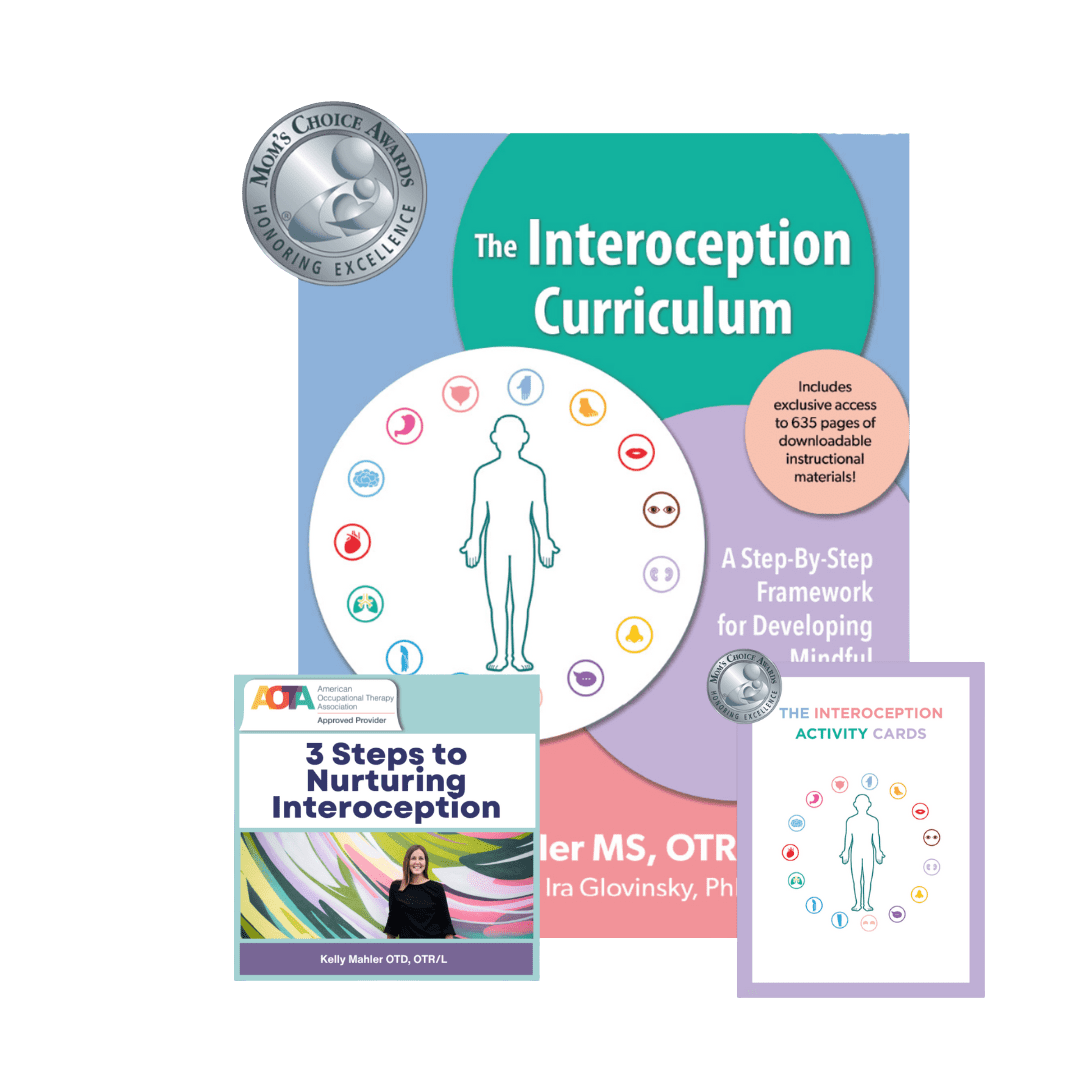
The goal of The Interoception Curriculum isn’t to quiet or control the body. It’s to support a different relationship with it; one rooted in belief, validation, curiosity, safety, and trust. At the heart of this approach is a simple but often missing starting point: we believe the person’s experience, and we validate it. From there, the curriculum is structured in three parts that gently build on one another:
Section 1: Noticing Body Signals
People are invited to explore a wide range of body signals in safe, playful ways. This can help expand awareness beyond just one or two intense sensations, offering practice shifting and spreading attention across different body areas. Over time, this may also begin to reshape predictions, supporting the idea that body signals can be noticed without always meaning something is wrong or unsafe.
Section 2: Understanding What Body Signals Might Mean
Rather than being told what signals “should” mean, individuals are supported to explore their own patterns and interpretations. This is a highly individualized process, grounded in curiosity and personal experience, not assumptions.
Section 3: Taking Care of Body Signals
Through guided experiments, people explore different ways to respond to their body signals and notice what (if anything) shifts. This happens in calm, supported contexts, not in moments of overwhelm, so the nervous system has space to learn, adapt, and build flexibility.
Across all three sections, the process supports:
• exploring body signals in ways that feel safe and doable
• building meaning through personal discovery
• experimenting with responses and noticing shifts
• developing flexibility in attention
• rebuilding trust in internal experiences
The Interoception Curriculum does not assume the body is wrong. It starts by trusting that the body is communicating something meaningful.
And for many people experiencing intense interoception…that shift can feel deeply meaningful.
Learn More About Intense Interoception
This topic is explored further in this on-demand course.
You’ll learn:
- how intensity, attention, and interpretation interact
- why some signals feel “sticky”
- how past experiences shape body awareness
- and practical strategies to support understanding, flexibility, and body trust
Intense Interoception FAQ
Why do my body sensations feel so intense or overwhelming?
Some people experience body signals in a louder, stronger, or more layered way. This can happen naturally, or it may become more noticeable during times of stress, illness, pain, or uncertainty. Intensity doesn’t necessarily mean something is wrong; it means the signal is strong and hard to ignore.
Why am I so aware of my body sensations all the time?
Some people notice internal sensations more frequently or vividly than others. This might include awareness of heartbeat, breathing, temperature, pressure, or internal discomfort. For some, this awareness increases when the body feels unsettled or when the nervous system is on alert.
Why can’t I stop focusing on certain body sensations?
Attention naturally moves toward sensations that feel important, unfamiliar, or uncomfortable. When attention “locks in,” it can make the sensation feel even stronger, creating a loop where the body signal and attention amplify each other.
How can I reduce or support intense body sensations?
For many people, the most helpful starting point isn’t forcing sensations to stop, but building more safety, flexibility, and understanding around them. This might include noticing patterns over time, gently widening attention, and trying small, supportive experiments in calm moments.
Support can also make a meaningful difference. Some people find it helpful to work with a provider trained in interoception-based approaches, including those familiar with The Interoception Curriculum, who can support exploration through curiosity, validation, and individualized understanding.
What should I do if a doctor says nothing is wrong, but I still have symptoms?
Your experience still matters. Normal test results don’t always explain what someone is feeling, and ongoing symptoms are real even when the cause isn’t clear yet. If you feel dismissed, it’s okay to ask more questions, track patterns, or seek a provider who listens with curiosity and respect.
Until next time, Kelly.