

Live Course: Interoception & Complex Trauma: Understanding What the Body Has Learned
$89.00 USD
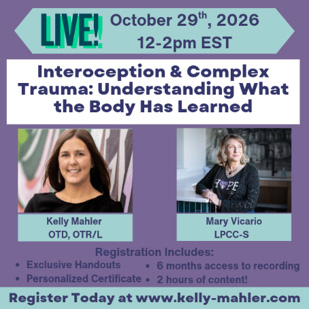
Date: October 29, 2026 @ 12-2 EST
Support is not inherently supportive.
You know trauma is part of the story. But what we may not consider is how that history shapes the way support itself is experienced. A strategy can appear gentle, reasonable, and even trauma-informed from the outside while feeling like pressure, loss of control, or threat based on what the body has experienced before.
This course is about connecting the dots. Together with Mary Vicario, a Licensed Professional Clinical Counselor and Certified Trauma Specialist with over 30 years of experience supporting children and adults, we’ll explore real-world cases involving early adversity, including abuse, neglect, violence, and exploitation. Using mini scenarios, we’ll work backwards and forwards, exploring what happened, what the body may have learned, how that learning might be showing up now, and what support should look like.
We’ll also explore the stress response cascade and why some traditional approaches can unintentionally make things worse. Using interoception and trauma as a practical reasoning lens, we’ll uncover why certain supports may not be working and what the body may need to experience instead. When we understand what the body may have learned from trauma, experiences that once seemed confusing can start to make sense—and we can see a clearer path toward support that matches what the body actually needs for healing and participation.
Description
This Course Includes:
- 2 hours of instruction with Kelly + Mary
- 6 months (180 days) unlimited access to the course
- Exclusive downloadable resources
- Personalized certificate of completion
What You’ll Learn:
- How to explore possible connections between what happened then and what you’re noticing now. Using complex real-world scenarios and Mary’s 30+ years of trauma experience, we’ll explore what the body may have learned and how that learning might be showing up today.
- How the stress response cascade can explain why some supports make things worse. Explore how interoception, perceived threat, and protective nervous system responses intersect and how some regulation supports, pressure, or behavioral control may intensify fight, flight, freeze, or submit responses.
- What can happen when a body repeatedly has needs that cannot safely be met. What might the body learn when hunger doesn’t lead to food, pain doesn’t bring help, exhaustion doesn’t lead to rest, or communicating a need creates more danger? We’ll explore how those experiences can continue showing up months or even years later.
- Why a strategy that looks perfectly reasonable on the outside might feel completely different on the inside. Explore how a person’s history can change the meaning of help, comfort, body awareness, choice, praise, touch, demands, and even seemingly supportive interactions.
- How to turn understanding into individualized interoception support. Explore how collaborative body discovery, noticing comfort and discomfort, responding to body needs, and adapting our interactions can help create new possibilities for connection with the body. Through the scenarios, we’ll consider where we might start, what we might do differently, and what this particular person may need next.
Course Description
We often know that trauma impacts the nervous system. But understanding that broadly is very different from looking at someone’s experience today and wondering, “How might what happened then be connected to what I’m seeing now?”
In this course, we’ll help you connect those dots. Together with Mary Vicario, we’ll explore the stress response cascade and its relationship with interoception, then use complex real-world mini scenarios to examine what a person’s body may have learned through trauma and how that learning might still be showing up today. We’ll consider experiences involving unmet body needs, bodily control, disrupted relationships, disconnection, and survival, and how these may shape eating, toileting, sleep, pain, touch, emotions, regulation, or other aspects of daily life.
Drawing from research and decades of clinical experience, we’ll work both forwards and backwards: What happened → What the body may have learned → What we’re noticing now → How might the body experience our support? → What might this person need next? We’ll also explore why approaches that seem helpful from the outside can sometimes increase perceived threat, intensify protective responses, or produce submission that is mistaken for regulation.
Importantly, this is not about creating simple cause-and-effect explanations or assuming we know another person’s inner experience. Similar histories can lead to very different outcomes, and sometimes we only know pieces of a person’s story. The goal is to become better at considering possibilities, asking more useful questions, and recognizing connections we might otherwise miss.
And most importantly, we’ll get super practical. Rather than offering another generic list of trauma strategies, we’ll use the scenarios to ask: “Given what this particular body may have learned, what might the body need to experience instead?” We’ll explore how collaborative body discovery, noticing comfort and discomfort, responding to body needs, and adapting our interactions can create new possibilities for support. You’ll leave with a clearer way to reason through complex situations and practical ideas for where to start, what to do differently, and what might need to stop.
When we understand what the body may have learned, we can stop asking the body to fit our strategies and start shaping support around what the body actually needs.
Who This Course Is For:
This course is for occupational therapy practitioners, social workers and other mental health providers, educators, speech-language pathologists, caregivers, and anyone else supporting children or adults with complex trauma histories.
This course may be especially helpful if:
- You support people with histories of early adversity, abuse, neglect, violence, exploitation, traumatic loss, disrupted caregiving, or other significant trauma.
- You know there has to be a reason an experience makes sense and want tools to better understand the connection between past and present.
- You see complicated experiences involving eating, toileting, sleep, pain, touch, emotion, sensory experiences, regulation, or other aspects of daily life that aren’t adequately explained by traditional approaches.
- You understand that “trauma affects the nervous system,” but want to go much deeper into what a particular body may have learned from particular experiences and how that learning might still be showing up today.
- You’ve tried strategies that aren’t helping or have watched increased demands, pressure, or attempts to change a response actually make things worse.
- You want to work through complex scenarios using both trauma and interoception lenses, rather than being handed another generic list of trauma strategies.
- You want to become better at figuring out where to start, what to do differently, what might need to stop, and what possibilities for support emerge once you understand the person’s experience differently.
Which Trauma Course Is Right for Me?
We offer three courses exploring trauma through different, complementary lenses.
→ An Interoception-Based Approach for Supporting Traumatized Learners
This course explores the foundational science connecting trauma and interoception and introduces Kelly’s three-level Interoception-Based Approach.
→ Unsafe, Unheard & Misunderstood: Exploring Autistic Trauma
In this course, Kelly and autistic OT Kim explore sensory, social, compliance, neurological and medical experiences that may contribute to trauma for neurodivergent people, combining research with lived experience.
→ Interoception & Complex Trauma: Understanding What the Body Has Learned (this course!!)
This course uses real-world scenarios and trauma + interoception clinical reasoning to connect past experiences, possible body learning and present-day experiences and explore what support might look like now. This course focuses heavily on experiences commonly encountered in complex trauma, including early adversity, abuse, neglect, violence, exploitation, traumatic loss and disrupted caregiving.
So, Who Are We?
For the past five years, Mary and I have served together on the same crisis support team, supporting some incredibly complex kids and the people who care for them. Week after week, I’ve found myself in awe of the way Mary thinks about trauma—and especially her ability to connect a person’s lived experiences with what is happening in the brain, body, and nervous system. I’ve learned so much from listening to her unpack a child’s history, make connections that I hadn’t considered, and help all of us understand why something that seems confusing in the present can make so much sense in the context of what came before. Her deep knowledge of trauma neuroscience has pushed my own thinking about interoception much deeper, especially around what the body can learn through early experiences and how that learning can continue to show up years later. This course grew naturally from the conversations we’ve been having for years: bringing our overlapping but different areas of expertise together and exploring what becomes possible when we look at complex trauma through both trauma neuroscience and interoception.
| More About Mary Vicario, LPCC-S | |
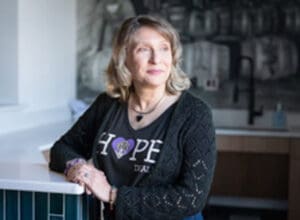 |
I am a Licensed Professional Clinical Counselor Supervisor, Certified Trauma Specialist, and founder of Finding Hope Consulting, LLC. In addition to loving theatre, dance, cooking, and trying new restaurants with friends, I read research for fun! This has given me over 35 years of experience translating the latest in relational neuroscience into practical strategies for building trauma-responsive interactions, organizations, and communities. I especially love helping learners explore and engage the hidden strengths found in survival skills by blending research and real-world application in engaging, hope-filled presentations. This allows me to blend together my experience as a Montessori and Traditional educator, play therapist, supervisor, clinical director and now international writer, consultant and trainer. |
| More About Kelly Mahler, OTD, OTR/L, FAOTA | |
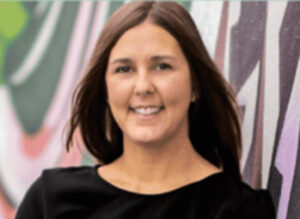 |
I am a fiery and passionate person who loves to crunch pinecones, cuddle with my two Corgi puppies, and cook (sometimes poorly) with my family. I earned a Doctorate in Occupational Therapy from Misericordia University, Dallas, PA, and have been an occupational therapist for 24 years, serving school-aged children and adults. I’m the winner of multiple awards, including the 2026 AOTA Fellow Award, 2020 AOTA Emerging and Innovative Practice Award, and a Mom’s Choice Gold Medal. I am an international speaker and enjoy presenting on topics related to the twelve resources I’ve authored, including The Interoception Curriculum. |