

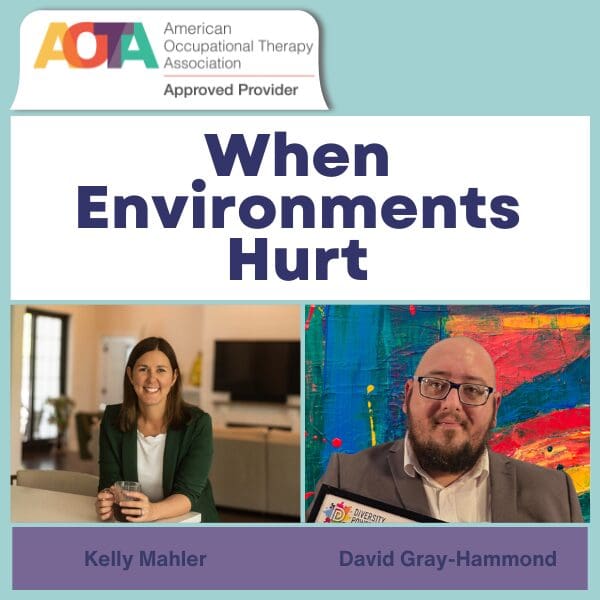
On-Demand: When Environments Hurt: A New Framework for Understanding Distress Beyond “Fixing the Person”
$89.00 USD
Distress is often treated like something that lives inside a person, something to regulate or fix. Even in supportive, well-intentioned approaches, the focus often stays on the individual: teaching coping strategies, building lagging skills, increasing resilience, while vital barriers in the surrounding environments largely remain untouched.
Environment matters. Many people already know that. This course expands what we mean by environment so we can think deeply enough: the bodymind environment (pain, fatigue, unmet needs, interoception), sensory and physical spaces, predictability and cognitive load demands, social and relational safety, and larger systems that shape access to care, support, and rights.
Most importantly, we explore this shift: distress is not a malfunction to eliminate. It is an interoceptive signal that the environment(s) need attention. Regulation and coping tools can be supportive, but they cannot carry the full burden when environments remain mismatched. When environments are not fully acknowledged, many neurodivergent people who are trying very hard, yet still struggling to participate, internalize the message: “I’m the problem.”
This course is designed to interrupt that story. You will leave with a compassionate framework and practical strategies for shifting environments so they can do more of the supporting across home, school, work, healthcare, and community settings.

Kelly Mahler is an AOTA Provider of professional development. Course Approval ID #15608. This Distance Learning-Independent is offered at .2 CEUS, introductory, OT Service Delivery and Foundational Knowledge. The assignment of AOTA CEUs does not imply endorsement of specific course content, products, or clinical procedures by AOTA.
Ready to get started with the course?
Group Discount Available:
2-5 Participants: 15% Discount
6+ Participants: 25% Discount
*Be sure to click the group option when adding courses to your cart, and the discount will apply automatically!
Description
This course includes:
- 2 hours of live instruction with Kelly + David (approximately 90 minutes of content + 30 minutes of Q&A)
- 6 months of access to the recording
- Personalized certificate of completion
- Practical reflection prompts and strategy tools
- While this course is excellent for a wide variety of attendees, this course is approved for 0.20 AOTA CEUs (2.0 contact hours)
Course Description:
Many approaches still place distress primarily inside the individual. Whether the goal is “better behavior,” stronger coping skills, improved regulation, or greater resilience, the underlying message can remain the same: something about this person needs to change.
This course offers an additional (and often missing) lens: the environment(s). Not as an afterthought. Not as a surface-level consideration. But as a central factor shaping participation, regulation, communication, and wellbeing.
Distress does not arise in isolation.
People are not sealed units. We are embedded in environments that shape our experience in constant and powerful ways, often far beyond conscious awareness. From this perspective, distress is not a nervous system failure or personal defect. It is frequently an interoceptive signal, a meaningful indicator that something in the bodymind, surrounding environments, or broader conditions of life is out of alignment.
When environments are not acknowledged, distress can become internalized as identity:
- “I’m too much.”
- “I’m always doing something wrong.”
- “I’m the problem.”
This course is designed to interrupt that pattern with deeper understanding and realistic tools for change.
Building on Luke Beardon’s Golden Equation
This course builds on Dr. Luke Beardon’s brilliant Golden Equation:
Autism + Environment = Outcome
We wholeheartedly agree and go further.
The word environment holds far more than most people have been taught to consider. While many professionals already “consider the environment,” this is often limited to surface factors such as sensory input alone.
In this course, we widen the lens to include:
- bodymind needs (interoception, pain, fatigue, health)
- predictability and cognitive load demands
- relational safety and autonomy
- access to care and resources
- systems that hold power and shape outcomes
Most importantly, we translate this expanded understanding into practical, realistic strategies for shifting environments across daily life.
The Nested Environment Framework (What We Mean by Environment)
Level 1: Inner Environment
Bodymind Environment
(interoception signals + meaning; pain/health; fatigue/sleep; hunger/thirst; energy regulation; trauma/stress physiology)
Level 2: Immediate Environments
Sensory Environment
(sound, lighting, smell, touch, movement, visual load, sensory unpredictability)
Physical Environment
accessibility, layout, space/crowding, seating, bathrooms, exits, physical comfort/safety)
Predictability / Cognitive Load Environment
(routines, transitions, clarity of expectations, pacing, task switching, uncertainty, executive demands, support tools like visuals/previewing/choices)
Social / Relational Environment
(attunement/misattunement, safe humans, co-regulation vs control, shame vs dignity, being believed vs dismissed, autonomy honored vs overridden, rupture/repair)
Level 3: Systems Environment (Institutional + Societal)
Systems / Power Environment
(school/workplace/healthcare structures; policies/rules; economic conditions; cultural norms; ableism/racism/sexism/classism; diagnostic gatekeeping; histories of trauma & marginalization)
Who This Course Is For
This course is for you if you:
- support neurodivergent people (children, teens, or adults)
- are a caregiver, OT, SLP, educator, psychologist, mental health provider, behavior professional, support staff, social worker, physician, or related provider
- feel stuck in cycles where plans focus heavily on changing the person but outcomes don’t improve
- want practical strategies to shift environments in humane, realistic, sustainable ways
- want language and frameworks that reduce blame and protect dignity
So, who are we?
David and Kelly have collaborated across a range of projects related to alexithymia, interoception, autistic burnout, and wellness. Their shared work centers neurodivergent dignity and lived experience while translating complex ideas into practical, real-world frameworks supporters can use immediately.Kelly has admired David’s work for years and credits his writing and thinking as a meaningful influence in her own continued learning and growth. Moving from “following his work from afar” to collaborating with him across multiple projects has brought many “pinch me” moments—and she’s thrilled to partner with David once again on this course.
 David Gray-Hammond is an Autistic, ADHD, and Schizophrenic man in recovery from addiction (now approaching 9 years sober). He has extensive experience working with Autistic people with complex mental health needs and regularly provides training to authorities and healthcare trusts. David works frontline with Autistic people as well as in independent academia researching Autistic mental health. He has written several books, the most recent of which A Guide to Autism and Psychosis was a best seller in it’s amazon category. All of his work is informed by his lived experience.
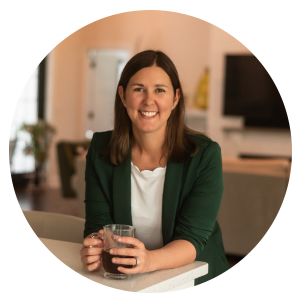 Kelly Mahler: Kelly Mahler is a fiery and passionate person that loves to crunch pinecones, cuddle with 2 Corgi puppies and cook (sometimes poorly) with her family. She earned a Doctorate in Occupational Therapy from Misericordia University, Dallas, PA and has been an occupational therapist for 24 years, serving school-aged children and adults. She’s winner of multiple awards including the 2020 American Occupational Therapy Association Emerging and Innovative Practice Award & a Mom’s Choice Gold Medal. Kelly is an international speaker and enjoys presenting on topics related to the twelve resources she’s authored including The Interoception Curriculum.
The Official Stuff:
- Course Level: There are no prerequisites for this course
- AOTA Areas: Foundational Knowledge, OT Service Delivery, Professional Issues
- CE Learning Outcomes: By the end of this course, participants will be able to:
- Identify the three levels of the Nested Environments Framework and provide at least 1 accurate example of each as they relate to occupational participation.
- Differentiate between a regulation-focused approach and an environment focused approach when supporting occupational participation.
- Select and apply at least 1 environment-based strategy that directly supports participation in meaningful occupations across contexts.
- Contact Hours: This course is worth 2.0 contact hours or 0.20 AOTA CEUs.
- Completion Requirements: To receive credit and certificate for this course you must listen to the course in its entirety, pass the accompanying assessment with an 80% or higher and complete a course evaluation. With the exception of AOTA-approved CEUs, this course is not approved or affiliated with any governing bodies that award continuing education credits, so continuing education credits are not guaranteed.
- ADA/Section 504: If you require special accommodations, please contact us at [email protected]
- Kelly Mahler is an Approved Provider of Continuing Education for occupational therapists and occupational therapy assistants by the American Occupational Therapy Association. The assignment of AOTA CEUs does not imply endorsement of specific course content, products, or clinical procedures by AOTA.
- Speaker Disclosures:
- Financial: Kelly Mahler and David Gray-Hammond have received royalty payments from Mahler OT related to this course.
- Non-Financial: Kelly Mahler and David Gray-Hammond have no relevant non-financial relationships to disclose.
Questions:
Contact us at [email protected].
Additional information
| Course Credits | AOTA Course, On-Demand |
|---|