


Some of the most meaningful gifts we can offer ourselves and others don’t come in a box! Explore eight interoception-informed gifts that honor individual needs and challenge compliance-based expectations. And the best part? They don’t cost a thing.

Gift 1: Exploring and Understanding Your Body Signals
So many of us grew up learning to ignore our body signals. We were taught what our bodies should feel, what certain signals should mean, and what we should need. How many of us were actually given opportunities to discover our authentic inner experiences?
And here’s the thing. After years of being taught to ignore or second-guess our body signals, simply telling ourselves to “listen to our bodies” isn’t always enough. Sometimes we need intentional interoception exploration to begin unlearning that conditioning and discovering what our bodies actually feel and need.
One of my favorite parts of interoception work is how much I’m STILL learning about my own body! And I hear the same from parents, educators, and therapists exploring alongside the kids they support.
What a gift to have these opportunities for ourselves AND to help create them for others. To communicate that someone’s inner experience matters, that we’re curious about it, and that we’ll believe what they share with us.
Keep exploring: The ABCs of Interoception: 26 Ways to Understand Body Signals.
Gift 2: Not Having to Earn Comfort
How many of us grew up learning that comfort was something we had to earn?
“Eat everything on your plate, THEN you can have dessert.”
“Finish your work, THEN you can have recess.”
“Calm down, THEN we can talk.”
And for many of us, these expectations followed us right into adulthood.
“Be productive all week, THEN you can relax this weekend.”
How many of us learned that our comfort needs came second to meeting someone else’s expectations? And how many of us are still carrying those messages today? As we work to unlearn these messages ourselves, what if we could offer the next generation a different gift?
Comfort isn’t a reward for doing the hard things. Sometimes comfort is what makes the hard things possible.
Gift 3: Proactive Support Before Distress
We live in such a reactive world. So often, support only becomes available AFTER someone is struggling.
What if we changed that? What could we offer throughout the day? Opportunities for movement? Connection? Predictability? A different environment? Rest?
And this goes for ourselves too. What supports could we build into our days before things get hard?
Of course, proactive support isn’t about assuming we know what someone needs. It’s about discovering what actually feels supportive to them and making those supports more accessible.
Keep exploring: Why Regulation Strategies Fail Without Environmental Modification.
Gift 4: Celebrating Attention-Seeking and Connection
Can we please celebrate attention-seeking?! Like, the next time you hear someone say “That’s attention-seeking behavior,” let’s pop some confetti and cheer! 🎉
As humans, we depend on other people for survival. Seeking someone’s attention can be a really healthy and effective way to take care of ourselves! Yet somewhere along the way, we’ve turned “attention-seeking” into something negative, especially when it comes to kids.
Sure, the way someone seeks our attention might not always be convenient or easy to understand. But that doesn’t make their need for connection any less valid. What if we started celebrating bids for connection instead of trying to extinguish them?
How can we remove the shame around seeking something so essential to being human?
Gift 5: Not Having All the Answers-Looking Beyond Behavior Labels
“They’re doing it for attention.”
“They’re trying to escape the task.”
“They’re being oppositional.”
Ugh. How many times have we heard these explanations? And once someone has been given one of these labels, how often do we keep looking?
What about their sensory experiences? The impact of our supports (or lack thereof)? Their past experiences? What the situation actually feels like for THEM?
Of course, we need to make our best guesses about what might be happening. That’s part of figuring out how to offer support! But those guesses aren’t facts, and there is often so much more to discover.
Not having all the answers puts us on a path of discovery. It means we don’t stop searching too soon. What a gift to give ourselves permission to say “I’m not sure yet” and to offer others our continued curiosity.
Keep exploring: 8 Differences Between Compliance-Based and Interoception-Based Approaches.
Gift 6: Repair When Co-Regulation Doesn’t Go as Planned
I meet so many people who genuinely want to offer more co-regulation support, but they’re nervous about getting it wrong. And I get it! A token board can feel so much more straightforward. Do this, earn that. There’s a clear plan.
But co-regulation? We’re navigating another person’s unique inner experience, and we won’t always know exactly what they need. We might offer comfort that isn’t comforting. We might misunderstand their communication. We might try something that doesn’t help.
And that’s where the gift of repair comes in. Sometimes saying, “I’m sorry, I got that wrong” can be just as meaningful as getting the support right in the first place. Because even when we get it wrong, we’re still trying to honor their inner experience rather than override it with compliance.
And maybe we can offer ourselves a little grace, too. We’re learning. We can take responsibility, reconnect, and keep trying.
Gift 7: Honoring NO, Boundaries, and Self-Advocacy
How many of us are still learning how to say no without feeling guilty? 🙋♀️ And yet, when a kid says no, how often do we immediately start figuring out how to get them to say yes?
We teach kids about respecting other people’s boundaries. Don’t touch someone or their belongings without permission. We talk about consent. When someone says no, we need to listen. We might even encourage self-advocacy. Use your break card if you need a break!
But what happens when they say no to us? Suddenly, the very skills we’re trying to teach can become behaviors we’re trying to change. A child says they don’t want a hug. We tell them they’re hurting Grandma’s feelings. They say they need a break. We tell them they have to finish their work first. They say no to an activity. Suddenly we’re talking about refusal or noncompliance and developing a behavior support plan.
Talk about mixed messages! And I get it. Sometimes the math really does need to get done. Sometimes we have places to be. Sometimes their no creates a problem we don’t have an easy answer for. So maybe, if we’re learning to honor our own boundaries, we can give kids the gift of having theirs taken seriously, too.
Gift 8: Less Compliance, More Interoception
What if we stopped measuring success by how well someone fits the norm or meets someone else’s expectations? Less compliance doesn’t mean chaos, less learning, or giving up on meaningful goals. It means getting curious about what someone is experiencing and creating the conditions that support their participation.
And maybe this is a gift we can offer ourselves, too. A little less pressure to fit expectations that don’t honor our own needs. Ugh…I’m working on this every.single.day.
Less compliance isn’t about lowering expectations. It’s about creating the conditions where expectations can be met.
Keep exploring: 5 Myths About Less Compliance (and What It Really Looks Like With Interoception).
Looking for More Interoception Gifts That Matter?
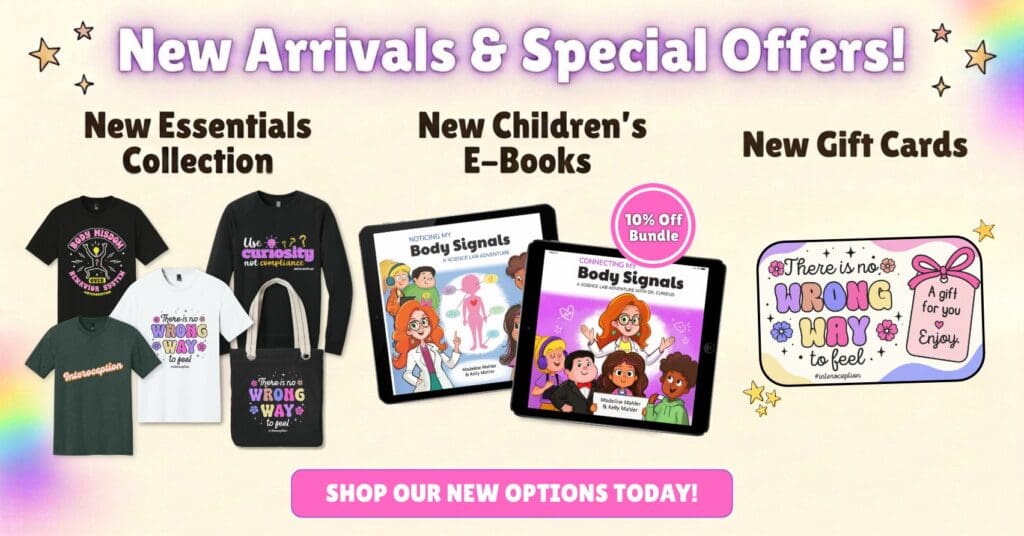
Some gifts DO come in a box (or an inbox)! If you’re looking for meaningful ways to share interoception with someone you love..or treat yourself..check out our 2026 Holiday Gift Guide!
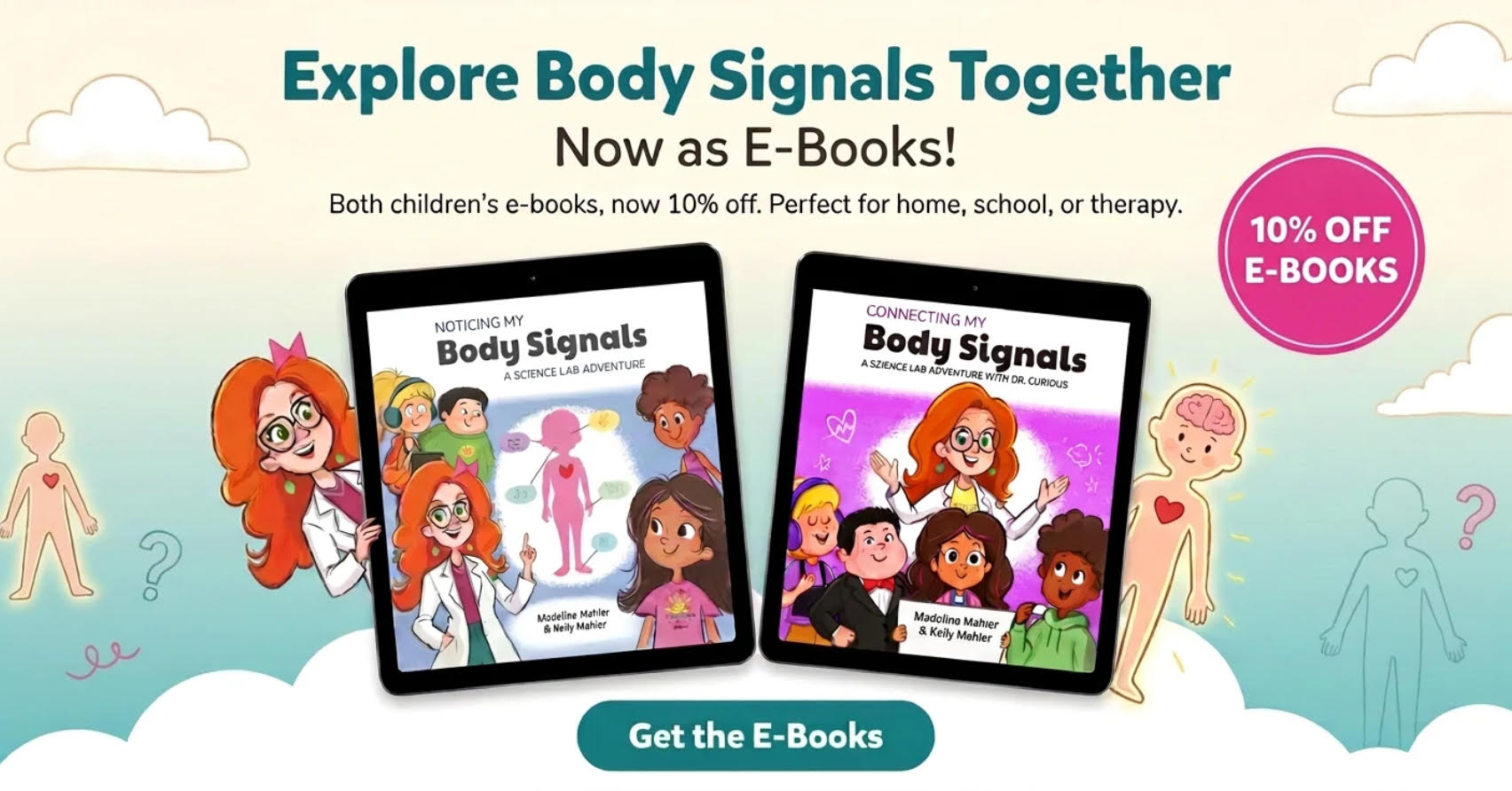
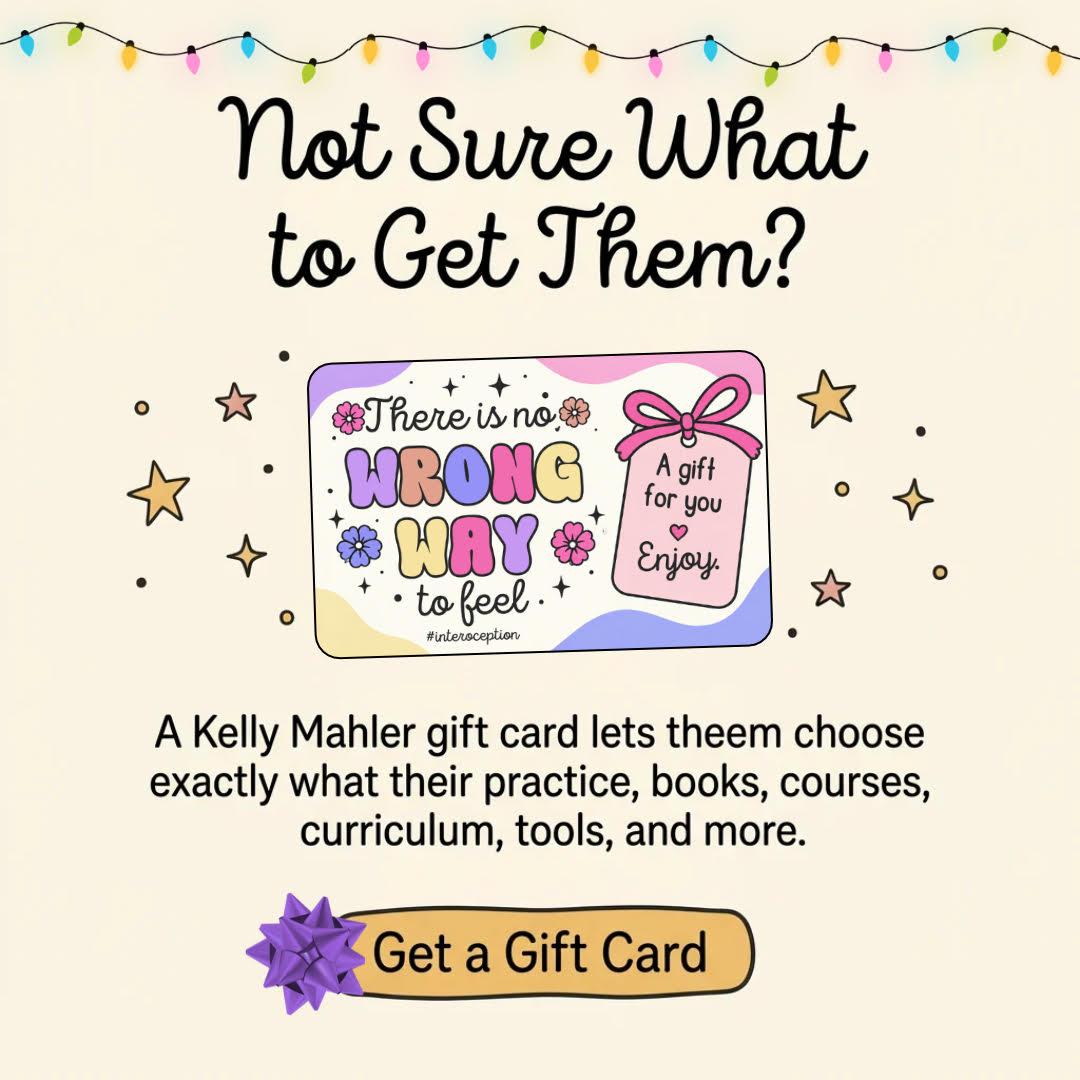
We’ve gathered some of our favorite interoception resources, including our new My Body Signals E-books, Interoception Essentials Collection, and gift cards.
Explore Our Holiday Gift Guide:
New Merch in Our Interoception Collection–Starting at $19!

Noticing Our Body Signals are Now Available in eBooks–Bundle and Save 10%!
Can’t Choose? Give the Gift of Choice with a Gift Card!
Until next time.