

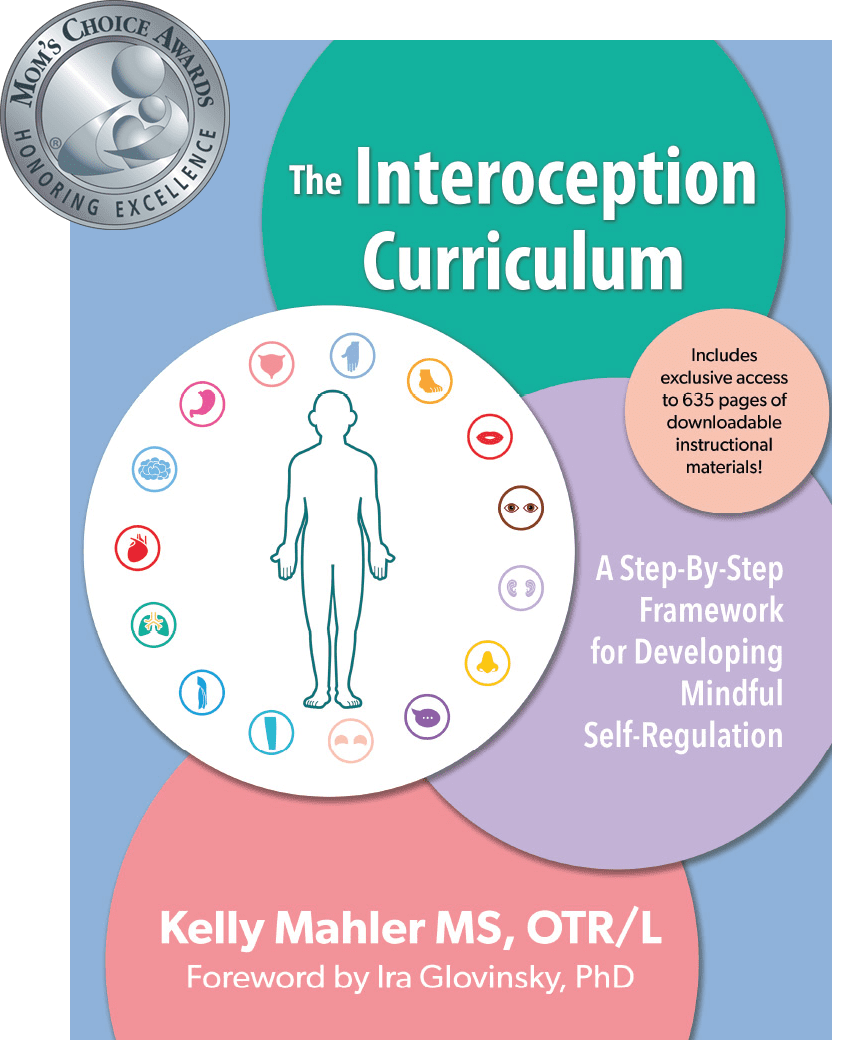
The Interoception Curriculum: A Step-by-Step Guide to Developing Mindful Self-Regulation
$159.00 USD
Includes exclusive access to 635 pages of downloadable instructional materials.
If you’ve ever thought…
- “My student melts down, and no one knows why.”
- “We’ve tried every regulation strategy, and nothing works.”
- “He’s memorized coping skills but never uses them in real life.”
- “They can label emotions but still explode/shutdown.”
- “The team is saying it must be ‘behavior’ because sensory approaches aren’t working… but I know there’s something more.”
- “I’m terrified I’m doing harm with compliance-based approaches, but I don’t know what to do instead.”
- “I know interoception is extremely important… but I don’t know what to DO.”
You’re in the right place.
This shift, from managing the outside to understanding the inside, is exactly why The Interoception Curriculum© is used by professionals and caregivers in 30+ countries. Many teams use it as the foundation for social emotional learning (SEL) because it all starts inside the body.
Description
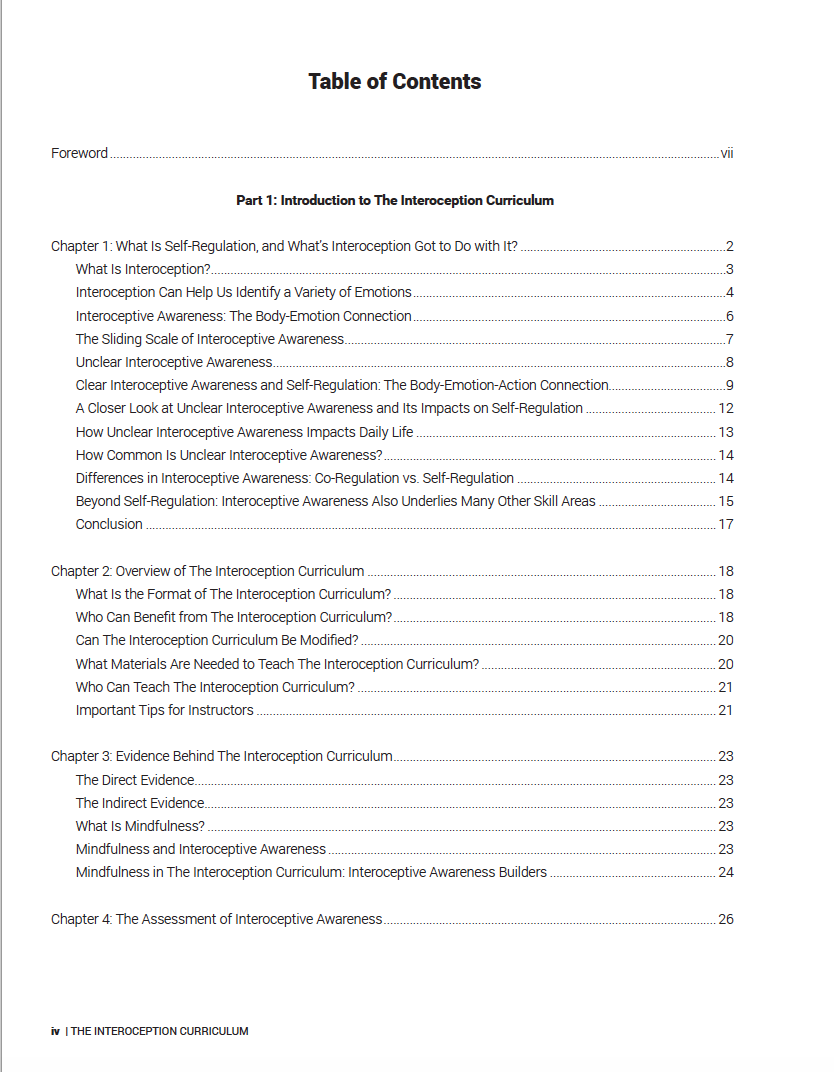
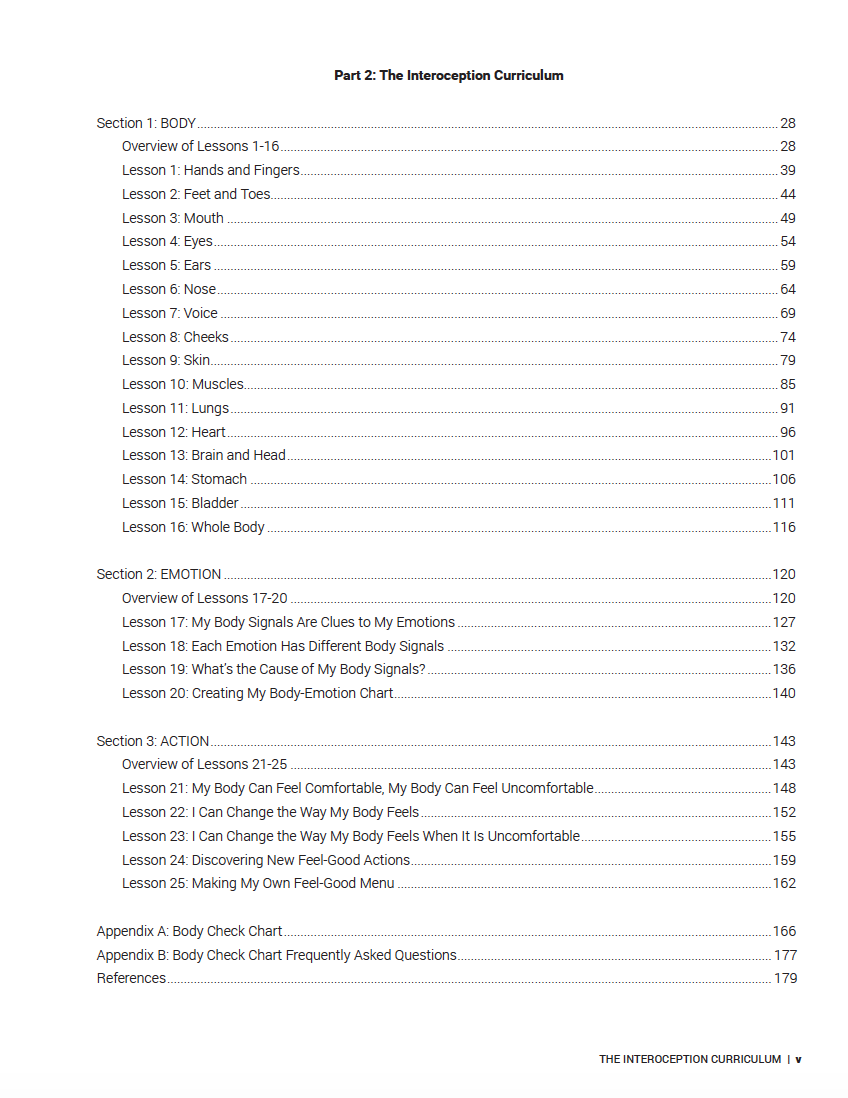
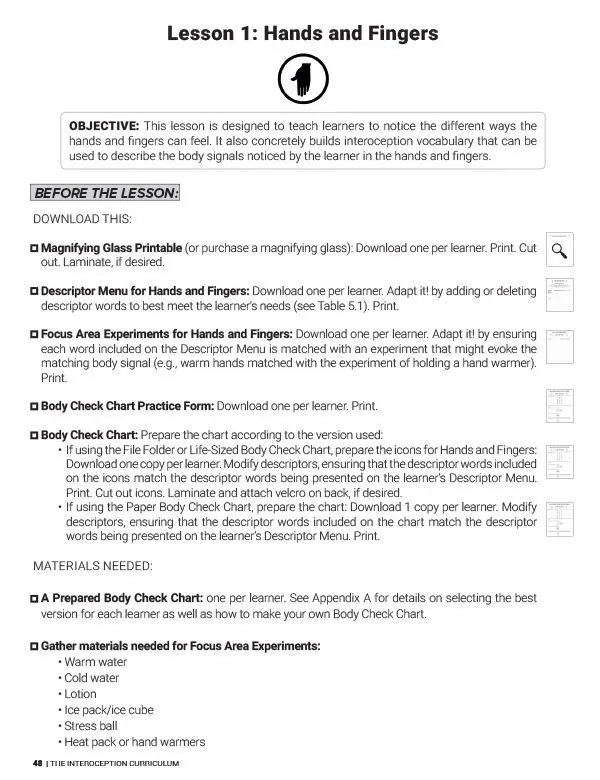
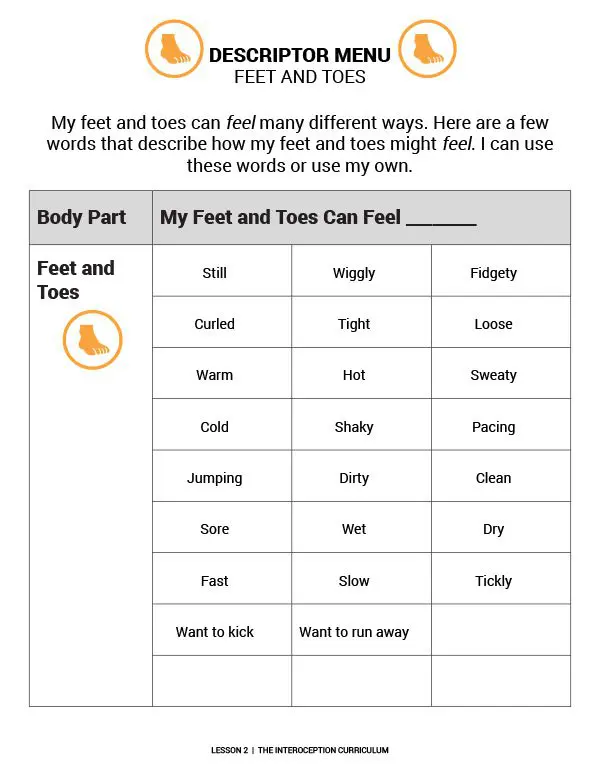
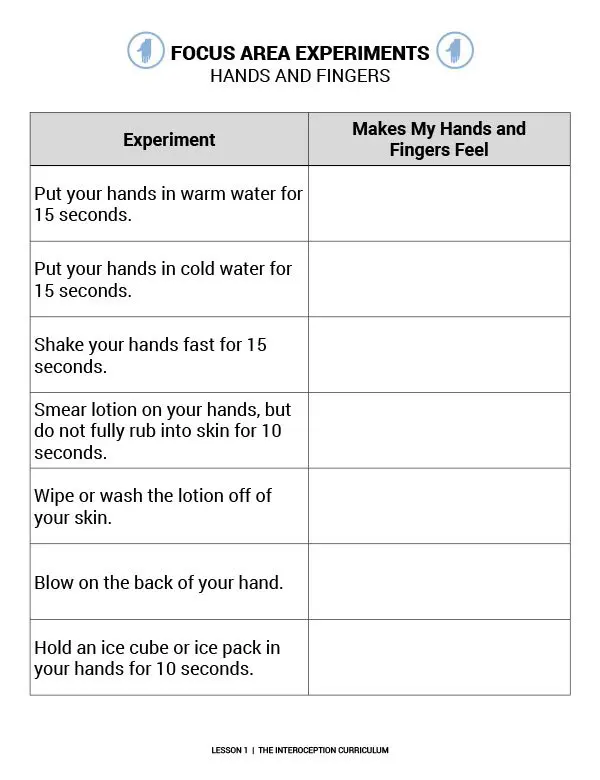
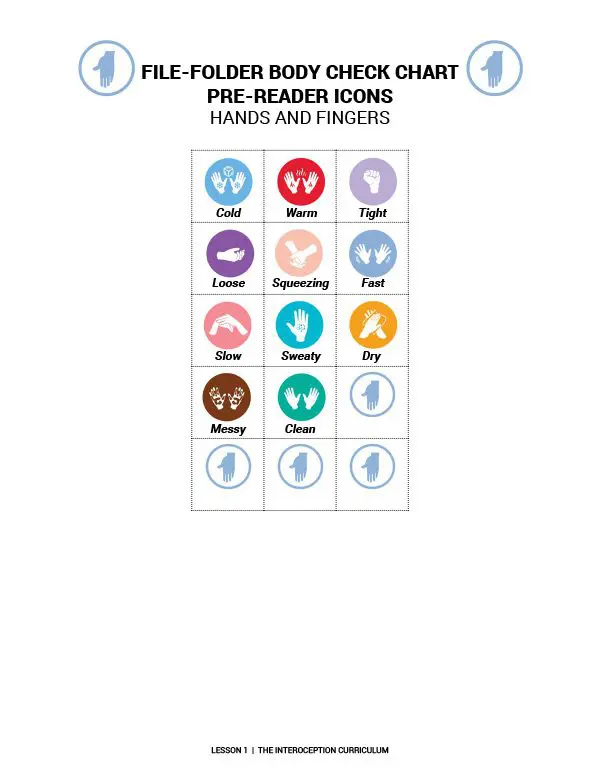
Developing mindful self-regulation or meaningful social emotional learning isn’t just about teaching a set of strategies. It’s about helping people understand what’s happening inside their bodies. That’s where The Interoception Curriculum© comes in. Step by step, it guides learners to notice those subtle (and not-so-subtle) body signals, connect them to their emotions, and take actions that address what their body is telling them. Over time, this builds skills, confidence, awareness, and lasting social emotional learning. To make it easy to follow and put into practice, the curriculum is organized into 25 lesson plans divided into three actionable sections:
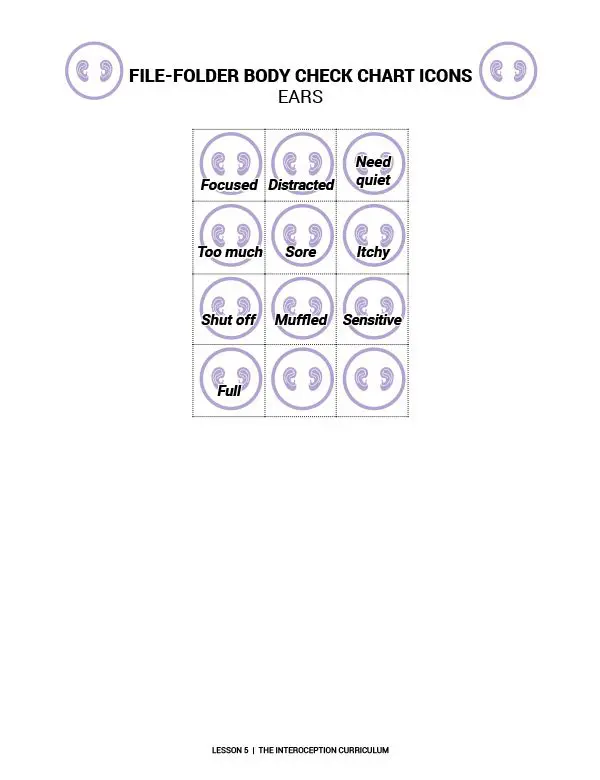
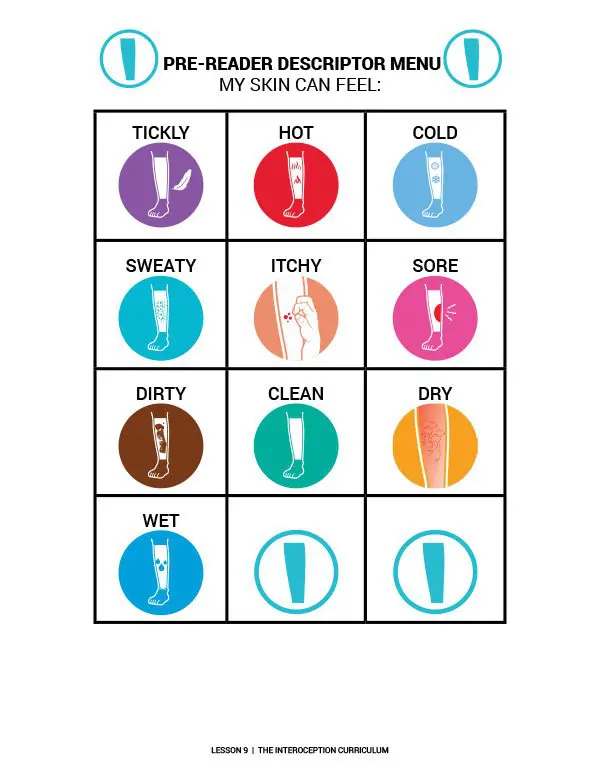
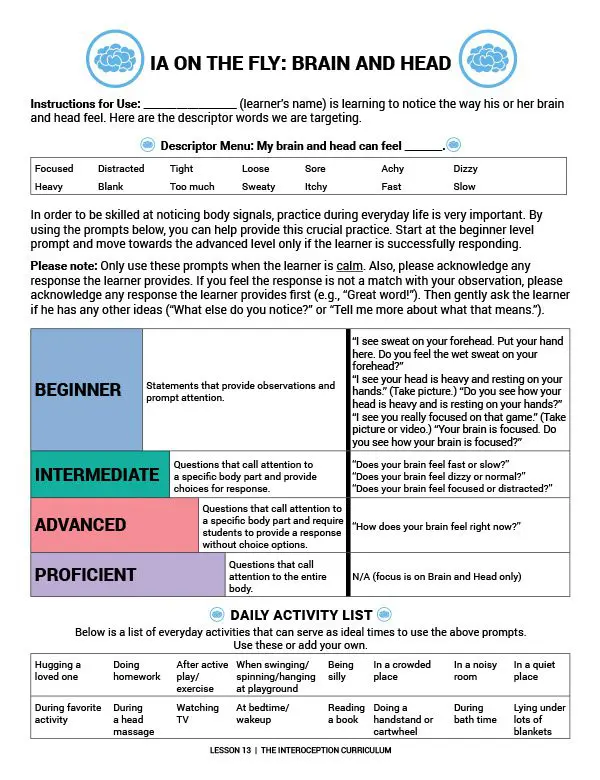
Section 1: Body Lessons (1–16) help learners notice and describe signals from specific body parts. By focusing on a single area at a time, learners can practice tuning into internal sensations in a manageable way. Each lesson includes strategies for reinforcing these skills throughout daily routines to support long-term growth.
Section 2: Emotion Lessons (17–20) guide learners in connecting their body signals to corresponding emotions. Understanding this body-emotion link is crucial for building self-awareness and creating a foundation for meaningful emotional regulation. Daily practice strategies help learners integrate these skills into real-world situations.
Section 3: Action Lessons (21–25) teach learners to respond intentionally to their body-emotion signals with individualized strategies that bring them what they need. This section emphasizes an individual approach to exploring a wide variety of feel-good actions so the learner can create their own Feel-Good Menu.
With The Interoception Curriculum©, you’ll go:
- From: “What’s the function or consequence?”
- To: “What’s the body signal?”
- From: “They’re choosing this behavior.”
- To: “What can we learn about their inner experience?”
- From: “Use the tool we taught you.”
- To: “Let’s figure out what their body actually needs.”
For tips on implementing The Interoception Curriculum© in different settings, check out our YouTube Playlist!
Who Is It For?
The Interoception Curriculum© is designed for anyone who wants to help themselves or others develop lasting self-regulation skills through interoception. Whether you’re a therapist, educator, caregiver, or self-learner, this curriculum gives you practical, evidence-based tools to understand internal body signals, connect them to emotions, and respond in ways that promote comfort and calm.
- Therapists and Clinicians: Integrate the curriculum into sessions to support clients with autism, ADHD, trauma histories, sensory processing differences, anxiety, or behavioral challenges.
- Educators and School Staff: Use lessons and visual supports to help students build self-awareness and emotional regulation skills. Ready-made activities, perfect for use as SEL instruction.
- Parents and caregivers: Learn strategies to support your child’s understanding of their body and emotions at home, creating a foundation for confidence and independence.
- Self-Learners: Discover your own interoception experience and practice actionable strategies for managing emotions, reducing stress, and increasing self-awareness.
No matter your role, the curriculum meets learners where they are, offering clear, step-by-step guidance to build interoception awareness and mindful self-regulation that lasts a lifetime.
Why This Curriculum Is Different
What makes The Interoception Curriculum© stand out isn’t just the structure, it’s the approach. Interoception activities are built on compassion, curiosity, and validation. We don’t teach people to ignore or “control” emotions. We teach them to understand what’s happening inside their bodies and respond in ways that honor their needs. That shift, from control to understanding, makes this work so transformative. And because it’s rooted in research and lived experience, this program bridges science and humanity in a way that feels authentic and accessible.
This curriculum also fills a major gap in traditional SEL: many programs focus on emotion labeling, memorizing coping skills, and performing social skills. Interoception shifts SEL to the inside-out, helping learners understand their body signals and what their body uniquely needs to thrive socially and emotionally. So SEL isn’t something they perform… it’s something they live.
What You’ll Get Inside
When you purchase The Interoception Curriculum©, you get everything you need to start immediately and begin developing mindful self-regulation with your clients, students, or for personal learning:
- 635 pages of downloadable materials, including worksheets, visuals, and handouts designed to support different learning styles and reinforce interoception awareness.
- Step-by-step lesson plans that guide you through the complete interoception process, from noticing body signals to connecting them with emotions and taking purposeful actions.
- Real-life examples and daily practice prompts to help learners apply interoception strategies in everyday situations.
- Printable visuals that make lessons accessible and engaging for all learners, supporting consistent practice and reinforcement.
This curriculum provides a comprehensive, evidence-based framework for interoception training. It helps learners understand their internal experiences, strengthen emotional awareness, and build lasting self-regulation skills.
You don’t need to “be the interoception expert” to use this. The curriculum guides you through exactly what to do, with structure, scripts, activities, and visual supports, so you can nurture interoception with confidence.
What People Are Saying About The Interoception Curriculum©
“At our elementary school, we’ve tried a lot of SEL programs over the years, but teachers still felt stuck when it came to supporting student behavior. A couple of years ago, we started using The Interoception Curriculum during our daily SEL time. What we noticed pretty quickly was that the conversations in classrooms began to shift. Students started talking about what their bodies were feeling, which gave teachers a clearer picture of what was going on. That meant they weren’t left guessing as much about how to support the student. We’ve seen fewer big escalations and more moments where students can pause and ask for support. Thanks from an Elementary School Principal!”
“Not gonna lie, I was skeptical because there are so many ‘self-regulation programs’ out there. But this isn’t that. It’s not like ‘calm down’ or ‘use your breathing.’ It’s like… understand your body first. It’s so much more respectful.”
“Just want to say… this is the first curriculum I’ve ever used where the kid doesn’t feel like the problem. It’s not about ‘fix that behavior.’ It’s like… let’s try things out and see what happens in your body. And there’s no ‘wrong’ answer, which is HUGE. That shift alone changed everything for my students.”
“Hi Kelly! I just needed to DM you because I’m actually emotional about this. We have a student who has been labeled ‘behavior’ for YEARS. We tried sensory supports, visuals, rewards, consequences… everything. The Interoception Curriculum helped us understand what was happening inside their body and it completely shifted how we support them. So much less escalation. It honestly changed the way I support this student, and the team is slowly getting onboard too!”
“I used the body lessons from The Interoception Curriculum with a teen who never wants to talk about emotions. And it worked! They were able to explore their body signals without feeling put on the spot or triggered. Huge win for us.”
Frequently Asked Questions About The Interoception Curriculum[NE5.1]©
Have questions about The Interoception Curriculum©? You’re not alone! Check out some of the most frequently asked questions about this book!
What Ages Does The Interoception Curriculum© Work for[NE6.1]?
The curriculum can be adapted for preschoolers through adults. Activities, language, and visuals can be modified based on developmental level, communication style, and learning needs.
Can I Use this Curriculum with Autistic and Neurodivergent Learners?
Yes. The Interoception Curriculum© can be very powerful for autistic and other neurodivergent learners (including ADHD and sensory processing differences), especially when interoceptive signals feel muted, intense, confusing, or hard to interpret. It also supports learners who have learned to mask or override their internal experiences to survive by rebuilding connection through curiosity and validation.
Can I Use this with Trauma Histories?
Yes. Trauma can impact interoception and make body sensations feel unsafe, confusing, or overwhelming. This curriculum supports a paced, respectful approach that prioritizes felt safety, curiosity, and validation.
My Learner Can Label Emotions, but Still Melts Down/Shuts Down. Will this Help?
Yes. Many learners can “script” emotions in calm moments but struggle to access authentic emotional information during stress. The curriculum helps learners use early body signals as clues so they can understand what they feel and respond more effectively.
Can I Use this Curriculum with Non-Speaking Learners or Early Communicators?
Yes. Interoception learning does not require mouth words. The curriculum can be adapted with modeling, visuals, co-regulation, and individualized communication supports.
What if My Learner has Alexithymia or Struggles to Describe Emotions?
This is exactly what the curriculum supports. It begins with body-based noticing and descriptive language without requiring emotion labels right away, helping learners build the body–emotion connection over time.
How Long Does it Take to See Results?
Interoception learning is developmental and builds over time. Many people notice early shifts quickly (more curiosity, more noticing), while deeper regulation changes develop with consistent practice.
How Do I Use this in Different Settings (Clinic, Classroom, Home)?
The curriculum is flexible and can be used in therapy, schools (whole class, small group, or individual sessions), and home routines. The structure supports consistent practice across real-life situations.
Do I Need Training to Use The Interoception Curriculum©?
No. The curriculum is designed to be clear and practical so you can start immediately. However, if you want deeper learning, the 3 Steps to Nurturing Interoception Course is a great supplement.
Single-User License and Usage
When you purchase The Interoception Curriculum, you’re getting a single-user license. That means it’s just for you—or for the specific person you’re buying it for.The good news is, once purchased, it’s yours to use forever—unlimited use for one person! You’re welcome to:
- Use the curriculum for your own clients, students, children at home, or personal study.
- Print and copy the downloadable materials for your own use (like worksheets for your own clients or students).
But there are a few important limits:
- It can’t be shared with other professionals (even in the same clinic, school, or district).
- It can’t be posted online, uploaded to shared drives, or made accessible to others in any digital format.
- It can’t be resold or transferred to another person after it’s been used.
Need multiple copies? We offer bulk discounts for schools, clinics, and organizations. Reach out to our team at [email protected], and we’ll be happy to give you a quote! You can always purchase a license as a gift or on behalf of someone else. Just make sure only one person ends up using the resource. If you’re buying for multiple people, each person needs their own license. We offer bulk discounts for schools, clinics, and organizations. Reach out to our team at [email protected], and we’ll be happy to give you a quote!
Additional information
| Weight | 1.05 lbs |
|---|---|
| Dimensions | 8.5 × 10.8 × .6 in |
4 reviews for The Interoception Curriculum: A Step-by-Step Guide to Developing Mindful Self-Regulation
Only logged in customers who have purchased this product may leave a review.
You may also like…
-
Sale!

The Interoception Curriculum Starter Bundle
Original price was: $399.00 USD.$299.00 USDCurrent price is: $299.00 USD. Add to cart -

The Interoception Activity Cards
$89.00 USD Select options This product has multiple variants. The options may be chosen on the product page
About Kelly Mahler, OTD, OTR/L
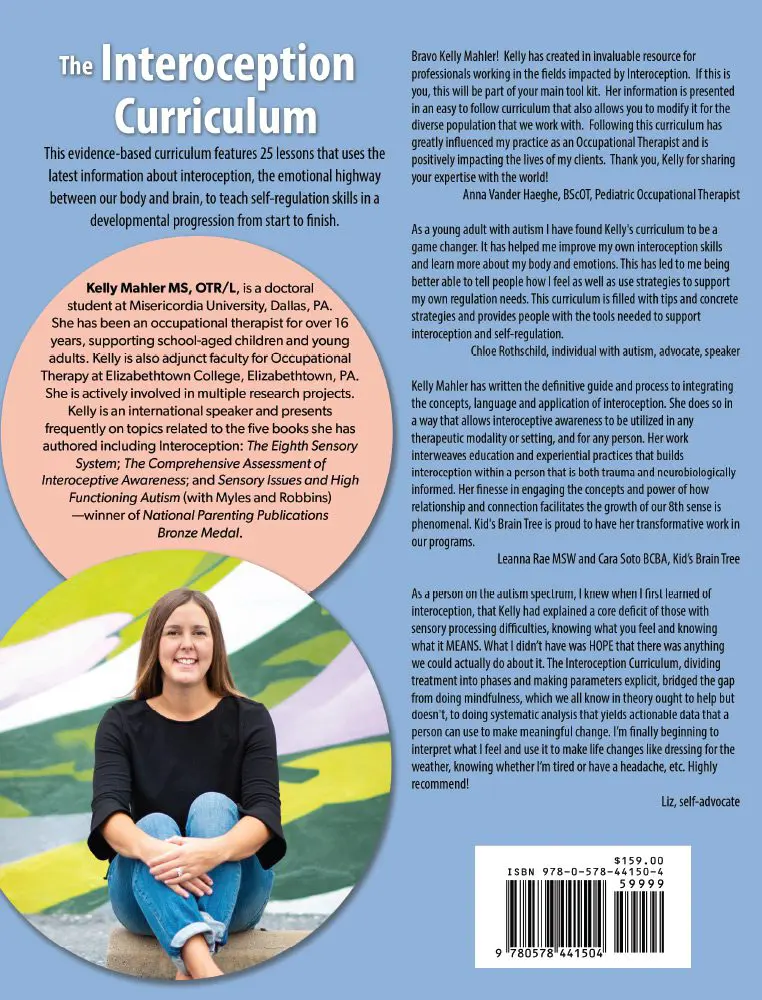
Kelly Mahler is an occupational therapist, educator, and interoception expert with over 20 years of experience helping children, teens, and adults develop self-understanding, emotional awareness, and lasting self-regulation. She is the award-winning author of ten interoception-focused resources, including the Mom’s Choice Gold Medal winner of The Interoception Curriculum©.
She has received honors such as the 2020 AOTA Emerging and Innovative Practice Award. Kelly presents internationally on interoception, self-regulation, trauma, and autism, providing therapists, educators, caregivers, and self-learners with practical, neurodiversity-affirming tools for building interoception awareness and mindfulness.
Add to cart
Anna Vander Haeghe, BScOT, Pediatric Occupational Therapist –
Bravo Kelly Mahler! Kelly has created an invaluable resource for professionals working in the fields impacted by Interoception. If this is you, this will be a part of your main tool kit. Her information is presented in an easy to follow curriculum that also allows you to modify it for the diverse population that we work with. Following this curriculum has greatly influenced my practice as an Occupational Therapist and is positively impacting the lives of my clients. Thank you, Kelly for sharing your expertise with the world!
Chloe Rothschild, individual with autism, advocate, speaker –
As a young adult with autism I have found Kelly’s curriculum to be a game changer. It has helped me improve my own interoception skills and learn more about my body and emotions. This has led to me being better able to tell people how I feel as well as strategies to support my own regulation needs. This curriculum is filled with tips and concrete strategies and provides people with the tools needed to support interoception and self-regulation.
Leanna Rae MSW and Cara Soto BCBA, Kid’s Brain Tree –
Kelly Mahler has written the definitive guide and process to integrating the concepts, language and application of interoception. She does so in a way that allows interoceptive awareness to be utilized in any therapeutic modality or setting, and for any person. Her work interweaves education and experimental practices that builds interoception within a person that is both trauma and neurobiologically informed. Her finesse in engaging the concepts and power of how relationship and connection facilitates the growth of our 8th sense is phenomenal. Kid’s Brain Tree is proud to have her transformative work in our programs.
Liz, self-advocate –
As a person on the autism spectrum, I knew when I first learned of interoception, that Kelly had explained a core deficit of those with sensory processing difficulties, knowing what you feel and knowing what it MEANS. What I didn’t have was HOPE that there was anything we could actually do about it. The Interoception Curriculum, dividing treatment into phases and making parameters explicit, bridged the gap from doing mindfulness, which we all know in theory ought to help but doesn’t, to do systematic analysis that yields actionable data that a person can use to make a meaningful change. I’m finally beginning to interpret what I feel and use it to make life changes like dressing for the weather, knowing whether I’m tired or have a headache, etc. Highly recommend!